
An Indian wedding is rarely one event. It is a week of overlapping rituals, family expectations, vendors and travel plans, and each function has its own mood, dress code and logistics. The couples who enjoy their own wedding are almost always the ones who planned the sequence early and delegated the details.
Start with the guest list, not the venue
Headcount decides everything: venue size, catering, rooms, transport and budget. Build one master list first, then split it by function. Roka and Engagement are usually family-only. Mehendi and Haldi suit a close circle. Sangeet, Wedding and Reception carry the full list.
A realistic timeline
- 10–12 months out: fix the dates, shortlist cities and venues, and set a budget range for each function.
- 8–9 months out: lock the venue, photographer, caterer and planner. The best names book first.
- 5–6 months out: finalise décor concepts, outfits, invitations and guest accommodation.
- 2–3 months out: confirm the run of show for every function, send RSVPs, and finalise music and choreography.
- Final fortnight: on-site walkthroughs, vendor briefings and a written schedule for every family member with a job.
Give every function one idea
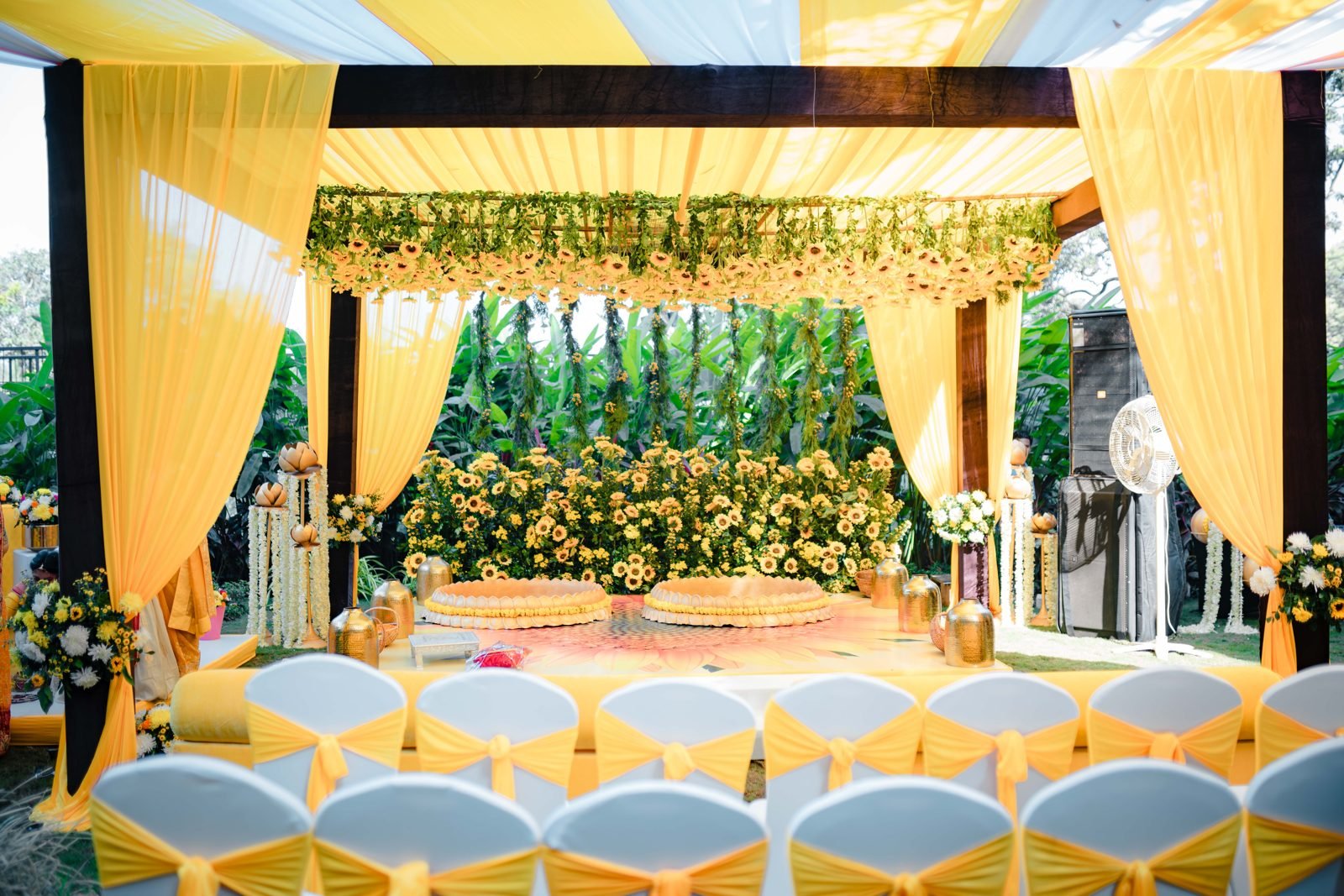
Seven functions with seven unrelated themes feel scattered. Choose one palette and one design language, then let each function express it differently: soft florals for Mehendi, marigold warmth for Haldi, drama and light for Sangeet, tradition and gold for the Wedding.
Where a planner earns their keep
A planner holds the whole picture: vendor timing, backup plans, family politics and the hundred small decisions on the day. Your job is to enjoy it. Ours is to make sure the mandap is ready, the baraat is on time and nobody has to ask where the next ritual is.